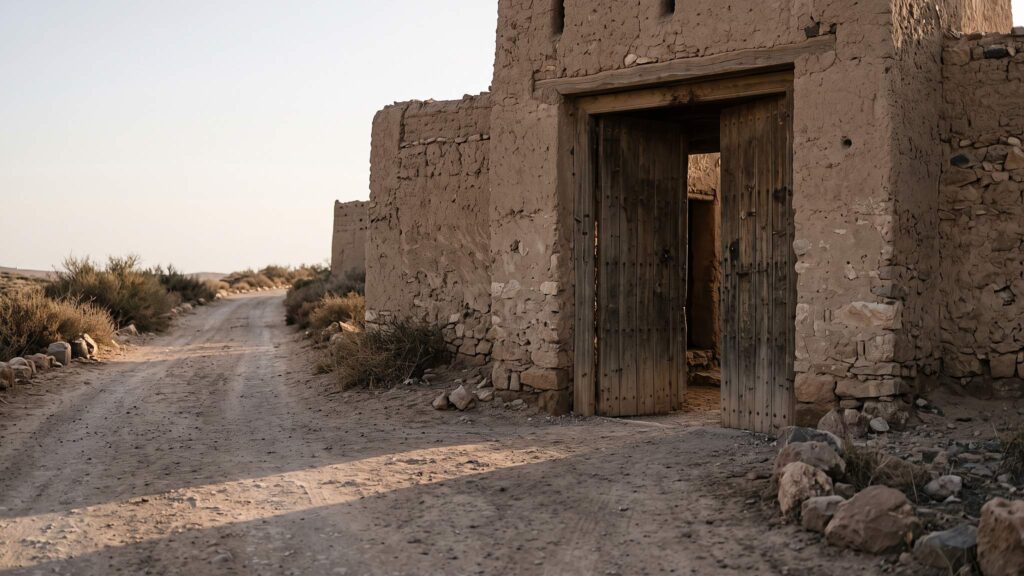
After the compressed argument of the opening, Surah Yasin does something the Quran often does when a point needs to land: it stops arguing and tells a story. Verses 13 to 32 present a town, three messengers, one believer, and a single blast that ends the matter. The story is short, and every element in it answers something raised in the first twelve verses.
The town is deliberately unnamed
The passage opens by presenting the companions of the town as an example. It does not name the town, the messengers, the man who believed, or the era. Some commentators identified the town as Antioch and named the messengers, drawing on reports from the People of the Book. Others, including a number of careful classical scholars, pointed out that these identifications rest on transmitted material that carries no obligation of belief, and that the Quran withheld the names for a reason.
That reason is visible in how the story functions. It is presented as a pattern, not a historical record. Stripped of names and dates, it becomes a description of what happens whenever a community decides in advance that it will not listen, which is exactly the condition described in verse seven.
Two messengers, then a third
Two are sent and rejected. A third is added to strengthen them. The response is the same. Note what the townspeople actually say: that these are only human beings like themselves, that nothing has been revealed, and that the messengers are lying.
This objection is the oldest one in the Quran and it recurs across many surahs. The demand behind it is for a messenger who is not recognisably human, which would defeat the purpose of sending one. The surah has already addressed it in verse three by placing the Prophet among the messengers rather than above ordinary human status.
The accusation of bad omen
The townspeople then tell the messengers that they see them as a bad omen, and threaten them with stoning and painful punishment. The messengers reply that the omen is with the townspeople themselves, and ask whether they say this simply because they were reminded.
The exchange captures a familiar move. When a message is unwelcome, the easiest response is to treat the messenger as the cause of misfortune rather than examine the message. The Arabic word used carries the sense of reading an ill sign into an ordinary event. The reply refuses the framing: the difficulty is not in the reminder but in the refusal to receive it.
The man who came running
At this point the narrative shifts. A man comes running from the farthest part of the city and urges his people to follow the messengers. His argument is stated plainly and it is worth noticing what is in it: follow those who ask no payment of you, and who are rightly guided.
Two tests, both practical. The messengers want nothing from their audience, and their message is coherent. This is presented as a reason accessible to anyone, not a claim requiring special knowledge. He then speaks about his own position rather than lecturing them, asking why he should not worship the One who originated him, and describing the futility of turning to intercessors who can neither help nor rescue. He ends by declaring his belief openly and asking them to listen.
He is killed, and then he speaks
The Quran does not narrate his death. It moves directly to the command that he enter the Garden, and then to his response: he wishes his people knew how his Lord had forgiven him and honoured him.
The compression is the point. A man is killed for a sentence, and the text does not pause on the killing. His first recorded reaction is not vindication or complaint but the wish that the people who killed him could see what he now sees. Classical commentators consistently drew the same lesson from this, that sincere concern for people does not stop at the point where they harm you.
It is also the moment the surah answers the anxiety underlying verse twelve. The man left almost nothing behind in worldly terms. One speech, and it persuaded no one. Yet the trace it left is being recited fourteen centuries later.
The single blast
The passage closes quickly. No army was sent down from heaven, nor was there any need. A single cry, and the town was still. The verses that follow lament the condition of people who mocked every messenger who came to them, and ask whether they have not seen how many generations before them were destroyed and did not return. The section ends by stating that all of them, together, will be brought before Allah.
The deflation is deliberate. The town treated the messengers as a threat requiring stoning. The actual resolution required nothing.
Why this story sits where it does
Verses 13 to 32 take the abstract claims of the opening and give them people. The shackles of verse eight become townspeople who cannot hear a straightforward argument. The traces of verse twelve become a man whose single speech outlived his killers. And the closing statement that all will be gathered sets up the third movement of the surah, which turns from history to the natural world.
Continue with the tafsir of verses 33 to 50, or read the full surah.
Frequently asked questions
Was the town Antioch?
Some commentators said so, based on reports from earlier scriptural traditions. Others held that the identification is unverifiable and that the Quran left it out deliberately. Neither position affects the meaning of the passage.
Who was the man who came running?
He is unnamed in the Quran. Several names appear in commentary literature, all from transmitted reports rather than from the text or from authenticated hadith.
Is this story connected to the Prophet Muhammad in Mecca?
Commentators have long read it that way. The parallels are direct: a rejected messenger, an accusation of falsehood, a lone believer facing his own community, and a warning that the outcome is not in the townspeople’s hands. See why Surah Yasin is called the heart of the Quran for how this fits the surah’s overall purpose.